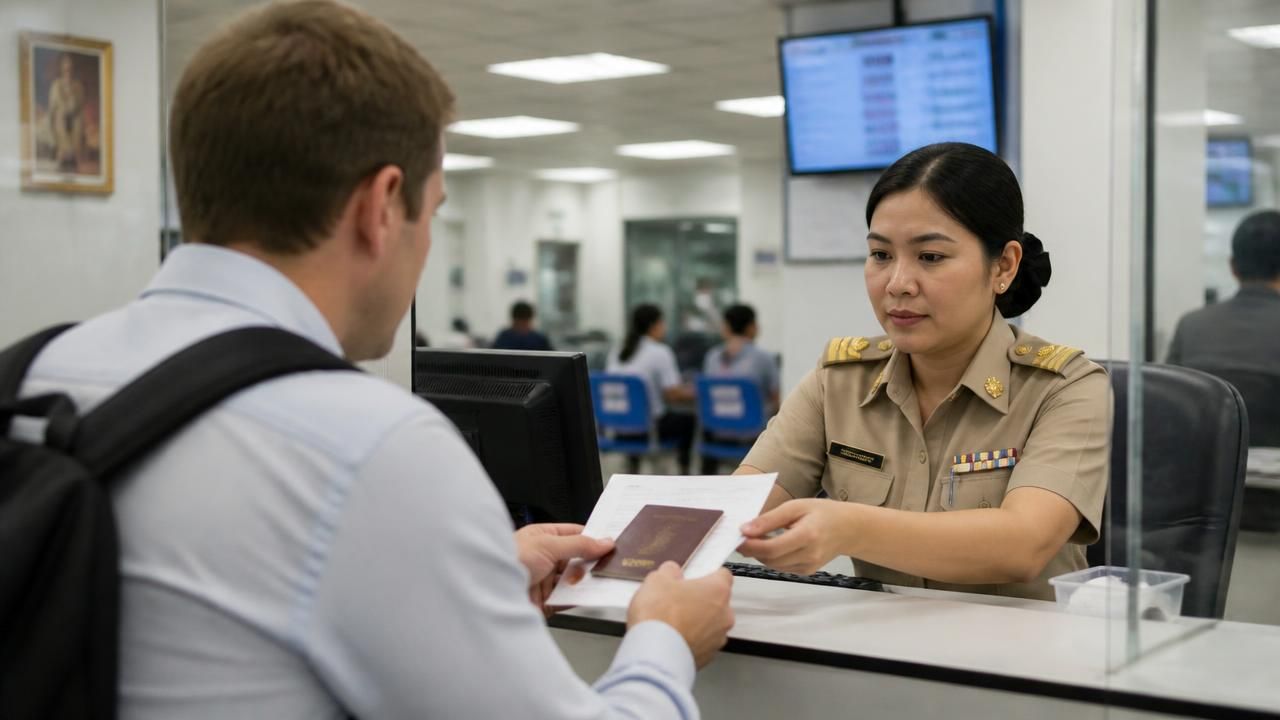
Visas and work permits

A work permit is not a document you obtain once. It is a matched set of employer conditions, visa category and job description that has to stay consistent every year.

Thailand grants the right to work to a specific person, employed by a specific company, in a specific position, at a specific address. Change any one of those four elements without amending the permit and the permission quietly becomes invalid — which is discovered at the worst moment, usually at renewal, at a labour inspection or when a bank asks for proof of lawful employment.

Visas and work permits handled by our Thai lawyers and accountants in Bangkok

Short answer

To employ a foreigner in Thailand the company generally needs paid-up registered capital of two million baht per foreign hire, plus four Thai staff for each of them, and the foreigner needs a Non-Immigrant B visa before the work permit is issued. Allow two to four weeks for the visa and one to three weeks for the permit. Board of Investment promoted companies are exempt from the ratio and use the investment centre channel described on our BOI page instead.

The employer qualifies before the employee does

Foreign nationals are refused work permits far more often because of their employer than because of themselves. The labour office looks first at the company: is the registered capital paid up, is there an office it can inspect, are social security contributions being filed for the Thai staff who make up the required ratio, and does the company's registered objective actually cover the work the foreigner will do. A company whose accounts show four employees on paper but three contribution filings has failed before the application is read.

The ratio rule in practice means four Thai employees for each foreign worker, and two million baht of paid-up capital for each foreign position. Exemptions exist and matter: promoted companies under the Board of Investment, representative offices, and certain treaty positions operate on different arithmetic. Choosing the wrong track wastes a month.

The job description is the part clients treat casually and officers treat literally. The permit lists duties, and work outside those duties is unpermitted work even when it is obviously part of running the business. We write the description broadly enough to reflect the real role and narrowly enough to stay within the reserved-occupation restrictions in Thai law.
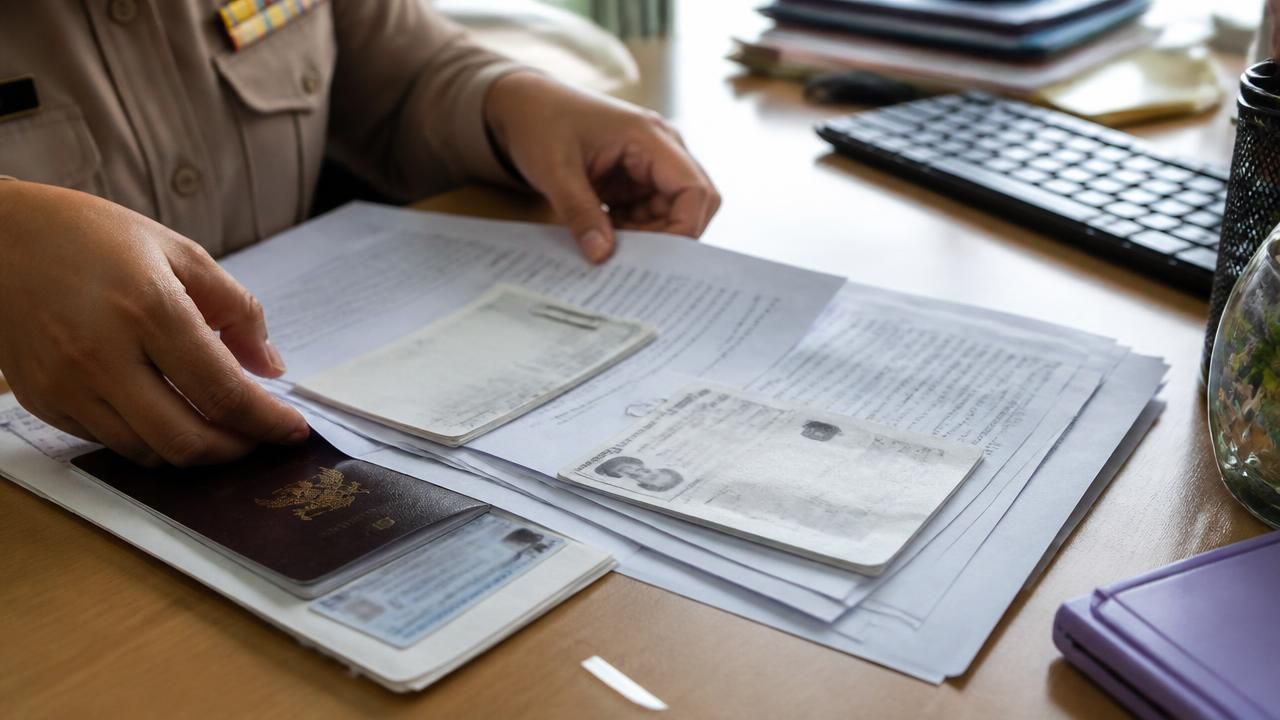
Documents and filings prepared for visas and work permits in Thailand
Every file is assembled and checked before anything reaches a Thai authority.

Sequence, timing and the mistakes that reset the clock

The correct order is visa first, permit second. The Non-Immigrant B visa is applied for at a Thai embassy or consulate abroad, or converted inside Thailand from a qualifying entry where the immigration office permits it. Attempting the reverse, or entering on a tourist stamp and hoping to convert, is the most common reason a start date slips by six weeks.

Once the permit is issued, three separate calendars begin and none of them reminds you. The permit itself has an expiry. The visa extension has a different expiry and is granted by the immigration office on evidence of continuing employment, tax payment and company standing. Ninety-day reporting runs independently of both. Missing the ninety-day report attracts a fine; missing a visa extension by a single day means leaving the country and starting again.

Renewal is an annual audit of the employment relationship. Immigration and labour officers ask for withholding tax certificates showing the salary actually paid, social security filings, the company's audited statements and evidence the Thai headcount ratio is still satisfied. A salary declared for the permit but not paid through payroll is the discrepancy that ends renewals.

Families, changes and the practical detail nobody mentions

Dependent visas for a spouse and children under twenty are granted on the strength of the primary holder's status, with legalised marriage and birth certificates. They do not carry the right to work; a spouse who wants to work needs an application in their own right, supported by the employer's own qualification.

Changing employer means a new permit, not a transfer. Resigning before the new permit is in place cancels the basis of the visa extension, and the grace period is short. We overlap the two processes wherever the outgoing employer will cooperate, and we tell you plainly when they will not.

Moving office, changing job title, adding a branch or amending the company's objectives all require the permit to be updated. These amendments are inexpensive and quick when done at the time, and they are the first thing an inspector compares against reality.

How the work runs, step by step

  1. Step 1

    Employer eligibility check

    We review paid-up capital, Thai headcount and social security filings, registered objectives and the office, and fix any gap before an application is exposed to an officer.

  2. Step 2

    Visa strategy and application

    Non-Immigrant B obtained abroad or converted in Thailand where permitted, with the invitation and employment documents prepared in the form the consulate concerned expects.

  3. Step 3

    Work permit filing

    Digital filing with the job description, qualification evidence, degree and employment certificates, and the medical certificate, followed by collection of the permit.

  4. Step 4

    Extension of stay and reporting

    One-year extension at the immigration office based on employment and tax evidence, re-entry permit, and a calendar for ninety-day reporting we run for you.

  5. Step 5

    Dependants and annual renewal

    Spouse and children visas, then the yearly renewal pack: payroll records, withholding certificates, social security filings and updated company documents.

What you send us

  • Passport with at least six months validity, plus every previous Thai visa and entry stamp page.
  • Degree certificate and transcript, and employment reference letters covering the claimed experience.
  • Recent photographs to the current specification and a medical certificate from a Thai clinic.
  • Employer documents: registration certificate, shareholder list, audited financial statements, VAT registration and social security filings.
  • Employment contract stating position, duties, salary and place of work.
  • For dependants: marriage and birth certificates, legalised and translated.

Where things usually go wrong

Working before the permit is issued

Attending meetings and signing on behalf of the company while holding only a visa is unpermitted work, and penalties fall on both the individual and the employer.

Declared salary above the salary actually paid

Immigration cross-checks withholding tax certificates. A mismatch between the permit, payroll and tax filings is the standard reason a renewal is refused.

Thai headcount ratio slipping mid-year

Staff leave and the ratio breaks silently. The failure surfaces at renewal, when it is too late to hire.

Duties drifting beyond the permit

A marketing manager who starts running the warehouse is working outside the permit. Amend the position when the role changes, not at renewal.

Government fees and professional fees, separated

The ranges below reflect what our own files cost so you can budget before committing. An itemised quote is issued before work begins.

ItemOfficial feeOur feeNote
Non-Immigrant B visaConsular fee set by the embassy concerned12,000–20,000 bahtIncludes the employer invitation pack and consulate-specific formatting.
Work permit (first issue)3,000 baht per year, plus 100 baht application fee15,000–25,000 bahtLonger where the position touches restricted occupations and needs argument.
One-year extension of stay and re-entry permit1,900 baht extension, 1,000–3,800 baht re-entry10,000–18,000 bahtRequires payroll and tax evidence consistent with the declared salary.
Dependent visa per family member1,900 baht per extension8,000–14,000 bahtExcludes legalisation and translation of foreign civil documents.

Questions foreign clients actually ask us

Can I convert a tourist entry into a work permit without leaving Thailand?
Sometimes. Certain entries can be converted to Non-Immigrant B inside Thailand at the discretion of the immigration office, provided the employer's documents are complete and enough validity remains on the current stamp. Where conversion is not available, a short trip to apply at a consulate is faster than arguing the point.
Which jobs are closed to foreigners?
Thai law reserves a list of occupations, and the practical effect is broader than the list suggests: manual labour, most trades, and roles such as legal practice or accountancy that require Thai professional licences. Management, technical and specialist positions inside a properly qualified company are the normal route.
Does my company need four Thai employees before I can hire one foreigner?
For the ordinary route, yes — four Thai employees with genuine social security filings for each foreign work permit, alongside two million baht of paid-up capital per position. Board of Investment promoted companies and some representative offices are exempt from the ratio.
What happens to my visa if I resign?
The work permit is cancelled and the basis for the extension of stay ends, leaving only a short grace period. Plan the overlap with the new employer before resigning, and tell us early enough that both filings can run in parallel.

Send us the company's registration documents, the current Thai headcount, and a short description of the position to be filled. We can then confirm whether the company qualifies today, what needs fixing first, and a realistic start date for the person you are hiring — including the family visas if they are moving with you.

Contact our office
contact@tla.co.thจ.–ส. 9–18น.15 นาที